
Where US LNG is actually going
Europe dominates by volume, but the growth story spans three continents

The US is rapidly expanding its LNG export footprint.
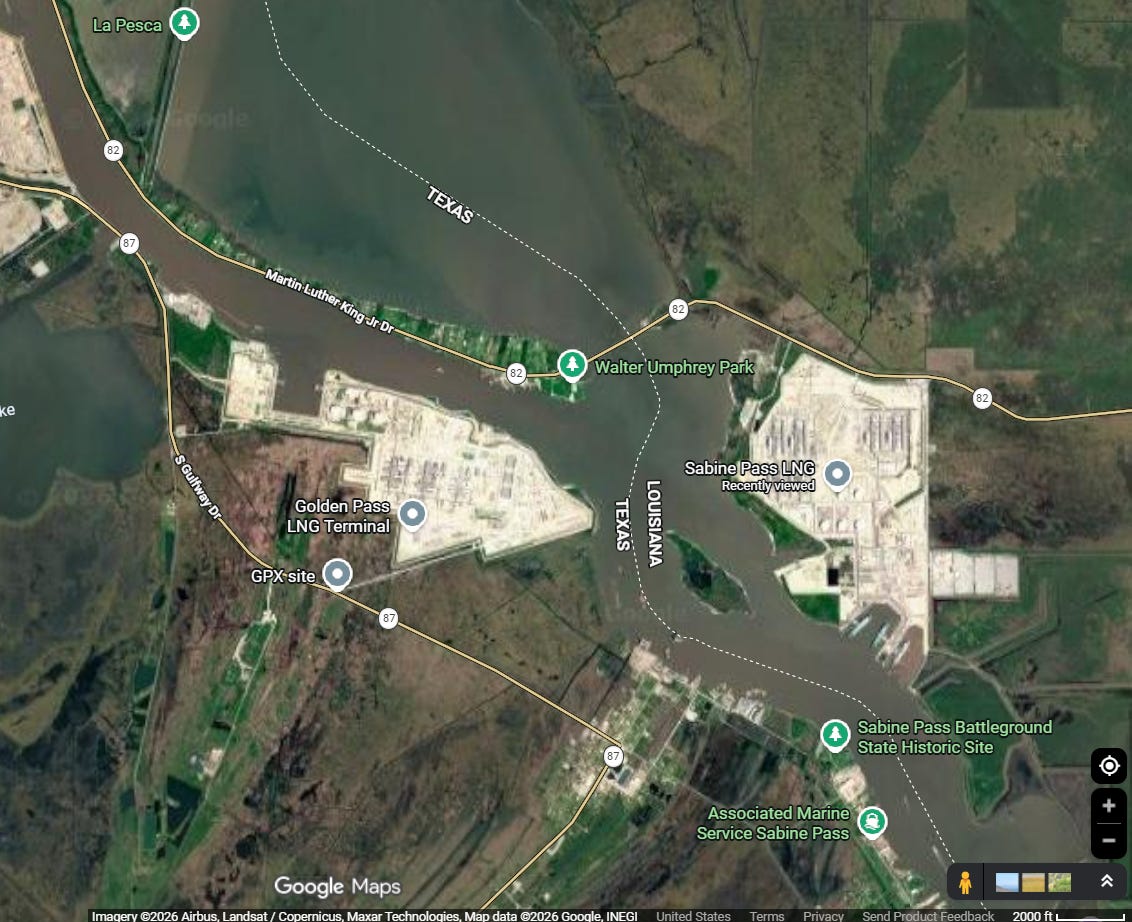
The journey started with the first train of Cheniere’s Sabine Pass facility in Louisiana in early 2016.
Now the Golden Pass facility, the 9th US LNG export terminal, is operational, which coincidentally sits less than half a mile away from the Cheniere site, on the Texas side of the same waterway.
The shale revolution unlocked a wave of inexpensive gas supply here in the US, far in excess of what’s necessary to meet domestic demand.
It only took a couple of years for the industry to realize LNG exports were the next step in this journey.
Now, with approximately 16 billion cubic feet per day (Bcfpd) of export capacity, the US is sending cargoes around the world.
Europe figures prominently in this story, given Russia’s 2022 invasion of Ukraine and the subsequent pivot away from Russian gas.
But US LNG is reaching nearly every corner of the world. And growth is coming from all over.
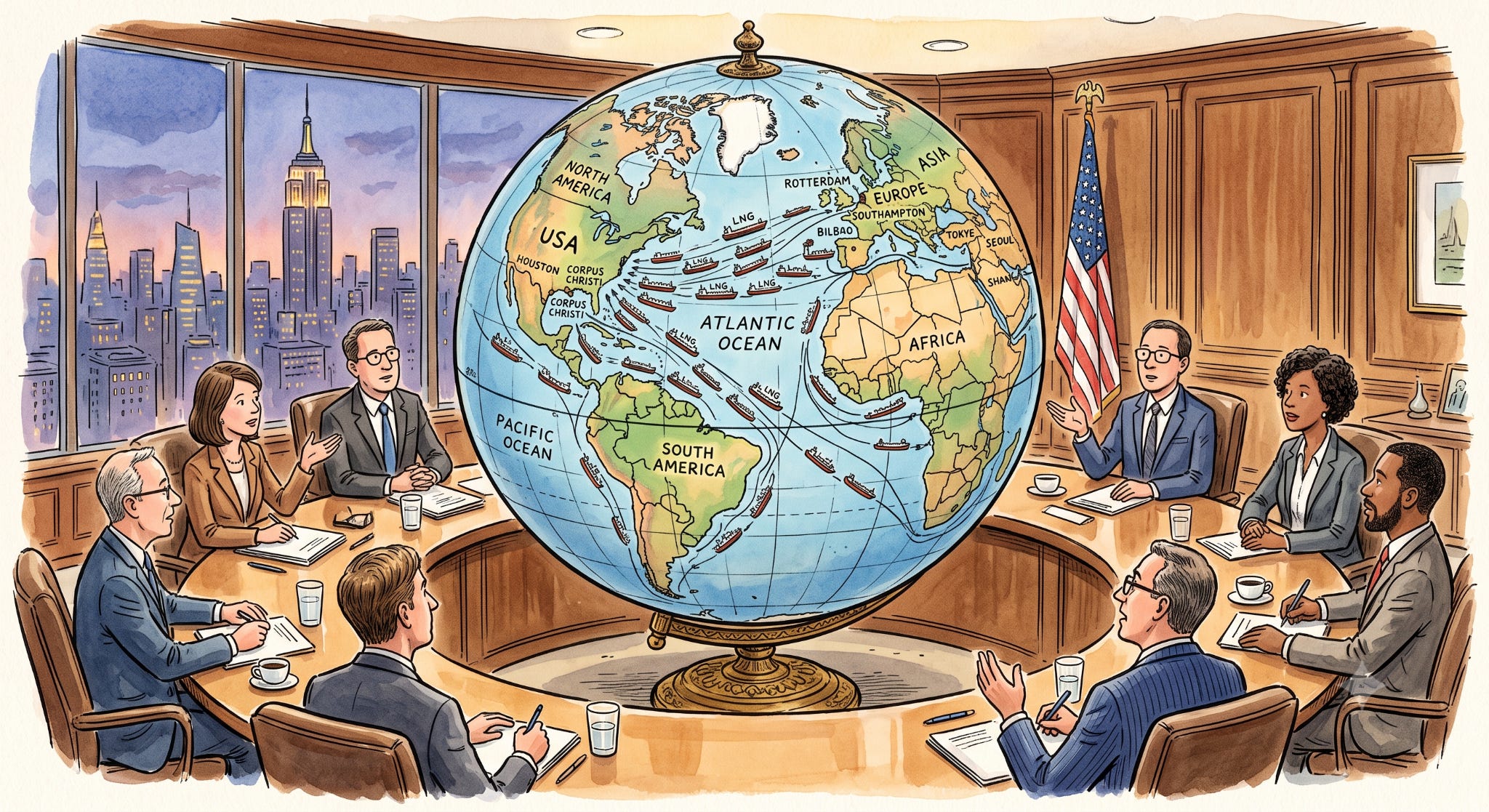
In this post we’ll explore the history of US natural gas exports, along with a look at where all these new LNG cargoes are landing.
We’ll close with a discussion around how we should think about what happens next.
Let’s dive in.
The US natural gas export story really started in 2001
Let’s start with a view of US natural gas exports going back to 1974.
The chart below offers a useful picture of how this whole story got started, along with today’s state of play. The units are in millions of cubic feet per day (MMcfpd).
