
Oilfield services is simultaneously playing defense and offense
Exploring the sector’s ongoing margin compression and forays into frontier areas like digital and power

Programming note: Within 48 hours, I’ll publish the next post, which will be about the divergence in US E&P investment between oil and gas plays.
Then this coming week I’ll publish a summary of the state of play in Venezuela, as OFS enthusiasm is hitting against the wall of E&P hesitation.
From that post forward, we’ll resume our normal weekly publishing cadence.
This week Halliburton and SLB reported full year 2025 earnings results.
With the bulk of earnings news ahead of us, let’s take a moment to understand the two different realities that are washing over this sector.
On one hand, the prevailing global crude oil supply surplus is driving down prices and rig counts.
As a result, the OFS sector faces continued activity erosion, which is weighing against revenue and compressing margins.
On the other hand, OFS companies are courageously placing bets in areas they believe will be the source of their future vitality.
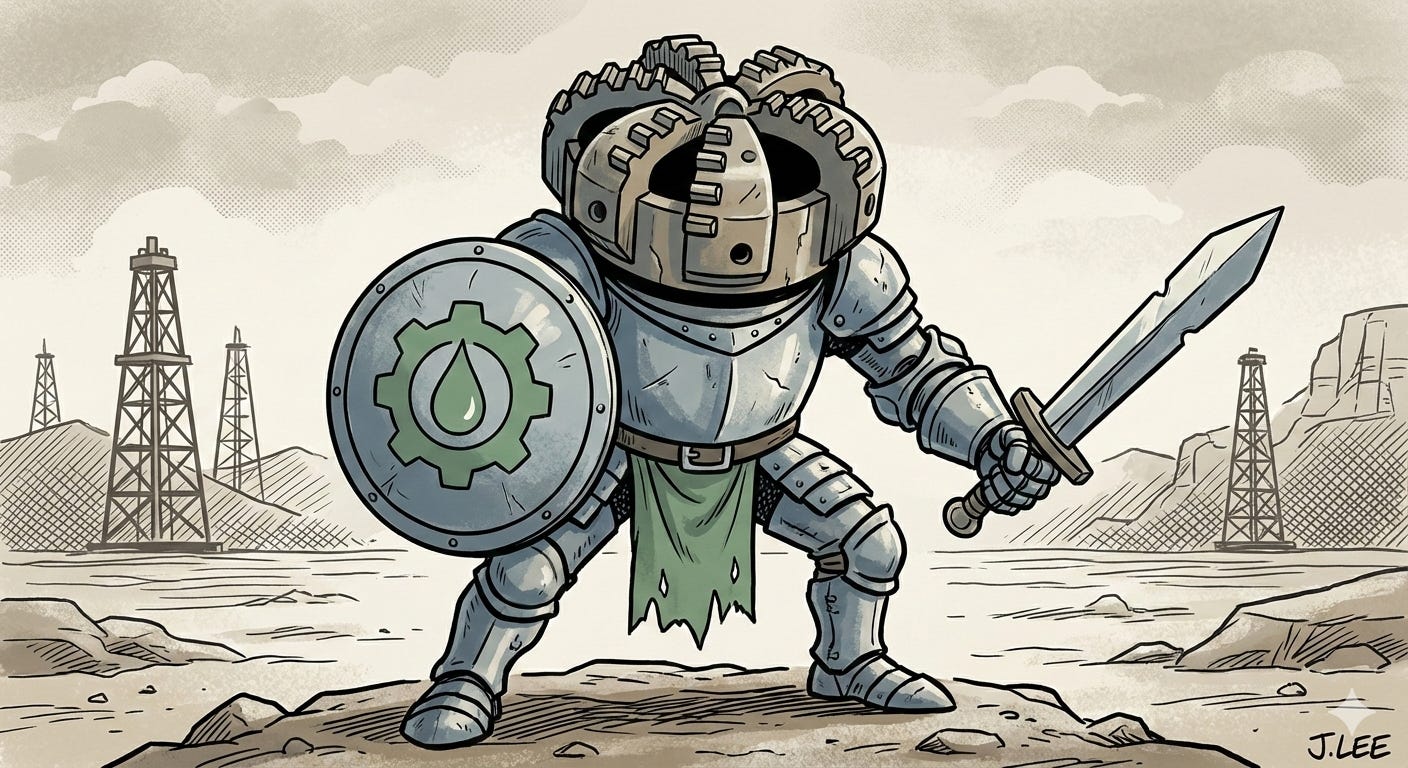
In this post, we’ll explore how revenue and margin pressures have built over the past several quarters, pushing the OFS sector into a largely defensive posture.
We’ll also see how this defensiveness has manifested in a sector-wide capex pullback.
But the story doesn’t end with retreat.
Beneath this defensive posture lies a sector that’s paradoxically healthier than it was before the pandemic, and quietly placing bets that could reshape its future.
We’re completing our first full year of OFS revenue declines
All the charts below show aggregate data we’ve collected across a range of 18 publicly traded oilfield service companies:
Baker Hughes
Cactus
Core Labs
Expro
Halliburton
H&P
Innovex
Liberty
Nabors
NOV
Oceaneering
Oil States
Patterson-UTI
ProPetro
RPC
SLB
TechnipFMC
Weatherford
This cohort offers a wide range of oilfield service firms, in size, in product and service offering, and in geographical footprint. We can feel confident that the results we draw from this cohort is representative of what’s happening across the OFS sector on the whole.
The first chart below shows the aggregate revenue for the 18 companies in our cohort for the trailing four quarters. We see that we’ve had three straight quarters of declines in this metric.
