
Chevron is building a truly massive natural gas plant for Microsoft
What the regulatory findings reveal about project scale and carbon management

In late June, Chevron and Microsoft announced a 20-year power agreement for a new data center development in West Texas.
It’s easy enough to skim the release, appreciate the news as a demonstration of oil & gas companies leaning ever harder into power, and move on to the next headline.
But Project Kilby, as this collaboration is called, is much bigger than most casual observers appreciate.
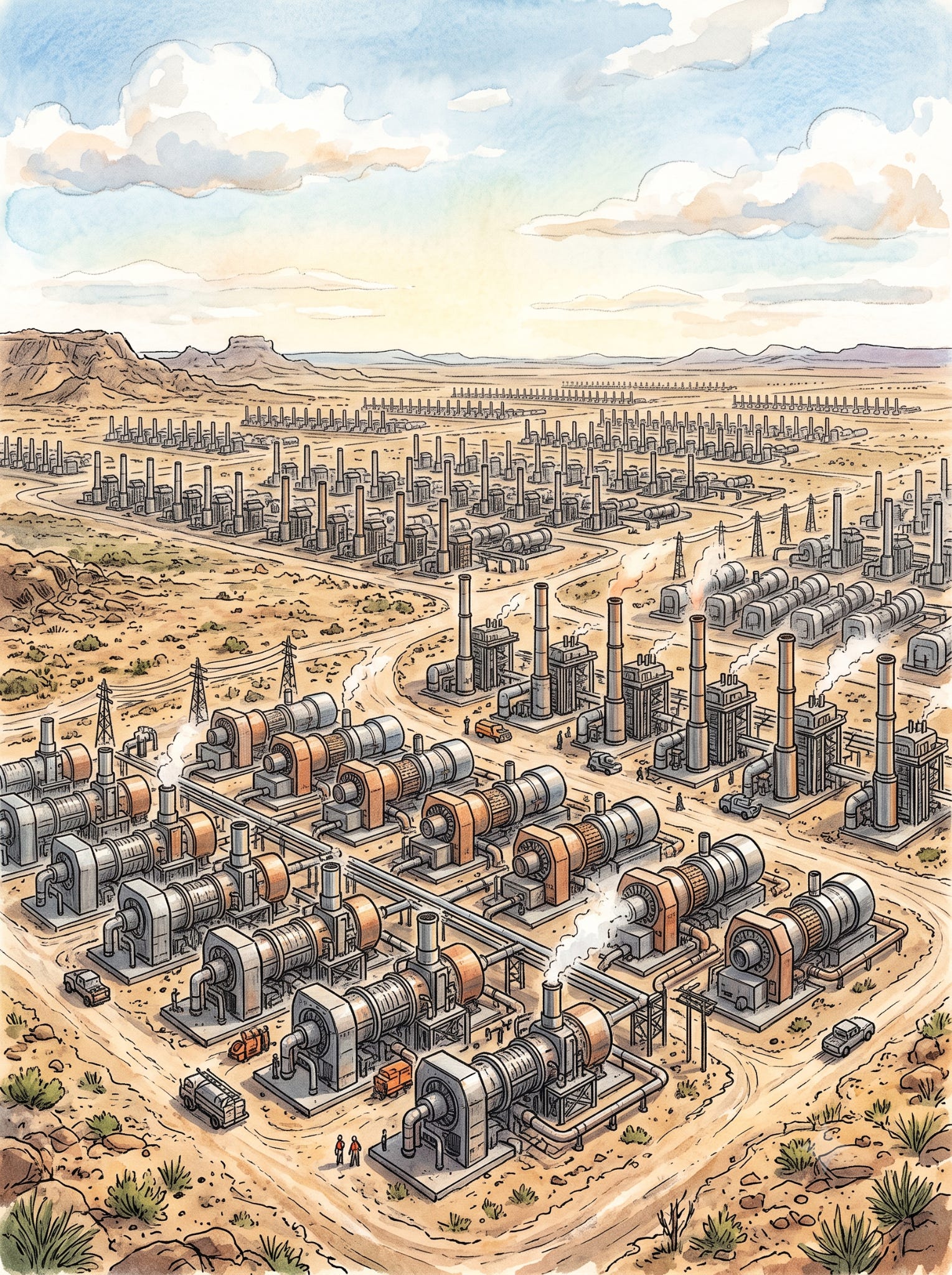
I dug through Chevron’s air permit filings with the Texas Commission on Environmental Quality.
There we can find exactly how many turbines Chevron plans to install, who makes them and what their capacities are, and we even get information about the cost and feasibility of deploying carbon capture and storage (CCS) at this facility.
The disclosures point to a plant that would rank as the second-largest natural gas facility in the US. And it sits entirely behind the meter, outside of the grid, with carbon capture formally ruled out on economic grounds.
Let’s explore some of the most consequential elements of this project.
The deal’s players and structure
This is how the press release starts:
